Author: jic459

  • Tïjonïk 32 (Unit 32) Ketikon ri achijab’ (The men plant): Antipassive I

    Tïjonïk 32 (Unit 32) Ketikon ri achijab’ (The men plant): Antipassive I

    In K’iche’ when we want to topicalize the agents of transitive verbs, we use a special construction called the antipassive. It is called antipassive because it is arguably the opposite of a passive construction. As you know, in passive constructions the verbal object is topicalized and the agent demoted. In contrast, in antipassive constructions objects are demoted and agents topicalized. Antipassive verbs are intransitive and agents are marked with set B markers. There are two antipassive constructions in K’iche’:

    • Absolutive antipassive (aka AP I)
    • Agent Focus antipassive (or focus construction) (aka AP II).
    The absolutive antipassive (AP I) focuses on the action and demotes the object, which is often presupposed. It may be introduced as an oblique prepositional phrase headed by ch(i)-E-e(ch).

    The agent focus antipassive (AP II) foregrounds verbal agents (A) (see unit 33).

    The absolutive antipassive (AP I) focuses on the action and demotes the object, which is often presupposed. It may be introduced as an oblique prepositional phrase headed by ch(i)-E-e(ch).

    As we said earlier, antipassive forms are intransitive, so Set B pronominal markers mark subject agreement. They also take the suffix –ik in phrase-final position.

    1.
    Kakitik ixim ri achijab’. The men plant corn. 2.
    Ketikon ri achijab’. The men are planting/the men plant. 3.
    Ketikonik They are planting/they plant.

    Example 1 shows the usual active construction in which agents are marked with set A pronouns and objects with set B pronouns. In contrast, in the antipassive constructions in Ex. 2 and 3, the 3rd person plural agents are marked with the Set B pronoun –e-.

    Objects in the absolutive antipassive  construction In the absolutive antipassive an object cannot be expressed directly. It needs to be introduced by the relational noun ch-e (ch-ech) forming what linguists call “an oblique object.”

    4.
    Kinuloq’oj le nutat. My father loves me. 5.
    Kaloq’on le nutat chwe. My father loves me.

    Semantically, both the active construction in Ex. 4 and the antipassive construction in Ex. 5 are the same. The difference concerns pragmatic focus, which in English is often expressed through a raising tone on the focused element. Ex. 4 does not just convey the feelings of love the speaker bears towards his/her father but rather clarifies that it is indeed love and not some other affect presupposed by the interlocutors. Oftentimes the object is unnecessary as it is clear from the context. Nevertheless, as we said earlier, if needed it is an oblique object introduced by ch -E, as can be seen in example 5.

    Transitive phrasal verbs that appear with a direct object as part of the verbal phrase, lose this object when in antipassive I:

    Active: 6.
    Kinbisoj uwach le wal. I miss/am sad about my child AP I: 7.
    Kinbison che le wal. I miss/am sad about my child

    Morphology of the absolutive antipassive (Antipassive I) The antipassive verbal stem takes the suffix –(V)n(ik)

    Derived transitives (non-CVC) drop the –j of the active voice and substitute it with –n,

    8.
    Kinq’ojomaj le q’ojom. I play the marimba (active). 9.
    Kinq’ojomanik. I play (in the sense of: music) (antipassive).  Root transitives (CVC) add the suffix – (V)n. The vowel is determined according to the following rules:
    Rule Example
    if root vowel is u then –un  k’ut     >  -k’utun(ik)
    if root vowel is a then –an tz’aj    >  -tz’ajan(ik)
    otherwise, -on tij        >  -tijon(ik)
    transitive verbs ending in glottal () add –n.  su’      >  -kinsu’n(ik)
    Irregular forms:
    Active Antipassive I Gloss
    to’ -tob’an(ik) to help
    t’is -t’iso’man(ik) to sew
    loq’ -loq’oman(ik) to buy
    Transitive verbs not used in the absolutive antipassive (AP I): The following verbs generally do not occur in the absolutive antipassive.
    Verb Root Gloss *Ungrammatical
    aj to want *kinajanik
    b’an to do *kinb’ananik
    ya’ to give *kinya’nik
    k’is to finish  *kink’isinik
    Antipassive of the verbs tij  “eat” and tijoj “teach” The antipassive “tijon(ik)” from tij “to eat” idiomatically means “eat human flesh” (like animal would do). It is not a regular antipassive form of  “eat”. The verb –wa(ik) has replaced it. Tijon(ik) can also be the antipassive form of “teaching.”

    Uses of the absolutive antipassive: 

    Object demotion:  The object is obvious, unimportant or presupposed.

    t’is                                                        to sew 10.
    Kut’is ri pantalon. S/he is sewing pants. 11.
    Kat’iso’manik. S/he is sewing.

    To dissolve disambiguity in honorific address): Transitive clauses with first person singular (in) and second person formal (la/alaq; singular or plural) are ambiguous. The absolutive antipassive may be used to clarify which person is the subject and which is the object.

    12.
    Kintzukuj la. I look for you (formal) or You (formal) look for me 13.
    Kintzukun che la. I look for you (antipassive). 14.
    Katzukun la chwe. You look for me (antipassive). 15.
    Kinto’ la. I help you or You help me (active) 16.
    Kintob’an che la I help you (antipassive). 17.
    Katob’an la chwe. You help me (antipassive). 18.
    Xinkunaj alaq. I cured y’all or Y’all cured me (active). 19.
    Xinkunan chech alaq. I cured y’all (antipassive). 20.
    Xkunan alaq chwe. Y’all cured me (antipassive).

    In some dialects, sentences with a third person plural subject and a formal second person object are ungrammatical. In this case, the antipassive (passive works as well) is typically used as an alternative.

    21.
    *Kuloq’oj la. He loves you (formal) 22.
    Kaloq’on che la. He loves (to) you (formal) (antipassive). 23.
    Kaloq’ox la rumal. You (formal) are loved by him (passive). 24.
    *Kakito’ la. They help you. 25.
    Ketob’an chech la. They help you (formal) (antipassive). Exceptions Some transitive verbs have intransitive counterparts used with tacit objects
    -tij(o) (vtr) to eat something -wa’(ik) (vit) to eat
    -ch’ab’ej (vtr) to talk to somebody -ch’aw(ik) (vit) to talk
    -oq’ej (vtr) to cry over someone -oq’(ik) (vit) to cry
    -elaq’aj (vtr) to steal something -elaq’(ik) (vit) to steal
    -il(o) (vtr) to see something -ka’y(ik) (vit)  to look
    Antipassive forms presuppose their objects. They’re either clear from the previous context or a culturally appropriate default. In some instances absolutive antipassives have become idiomatic expressions:
    Kinwesaj I take it out kinelesanik I take after someone
    Tij to eat something tijon(ik) to eat human flesh
    K’am to receive, take k’aman(ik) to become used to something
    Riq to find; to reach riqon(ik) to catch up, suffer
    Ch’aj to wash something ch’ajan(ik) to bathe, colors run
    K’amowaj to be grateful k’amowan  acceptable
    brin big bag; (costal)
    lame’t bottle
    xaq only, no more than, just
    uchi’ ja door
    we this one (demonstrative article)
    q’aluj (vtr) to carry in one’s arms
    b’ixaj (vtr) to sing
    ajlaj (vtr) to count
    maja not yet
    tatab’ej (vtr) to listen to someone
    b’isoj -wach (vtr) to be sad about someone
    raqij (vtr) to break
    wulij (vtr) to dismantle; take down
    tz’apij (vtr) to close
    paj (vtr) to weigh
    etaj (vtr) to measure
    sutij (vtr) to twirl; to turn around; to spin around
    ch’ajan (vit) to wash oneself, to bathe

    Translate and write the corresponding antipassive form with oblique object:

    1. Xatinto’o.
    2. Xujril le kunanel.
    3. Xinloq’ le po’t.
    4. Xkisipaj jun kami’x chwe.
    5. Xinriq k’ax.
    6. Xumes le warab’al ri ala.
    7. Xinaq’aluj.
    8. Xajosq’ij le upa awo’ch.
    9. Xintz’ib’aj le wuj.
    10. Xatkisolij le achijab’.
    11. Xukem jun po’t we wanab’.
    12. Xujto’ alaq.
    13. Xatkiriq le ixoqib’.
    14. Xkikamisaj le utiw ri achijab’.
    15. Xuk’ayij jun ak’ ri ixoq.
    Answers
    1. Xintob’an chawech.
    2. Xilon le kunanel chqech.
    3. Xinloq’omanik (you cannot add an oblique object here).
    4. Xesipanik (you cannot add an oblique object here).
    5. Xinriqonik (you cannot add an oblique object here).
    6. Xmeson ri ala che le warab’al.
    7. Xatq’alun chwech.
    8. Xatjosq’inik (you cannot add an oblique object here).
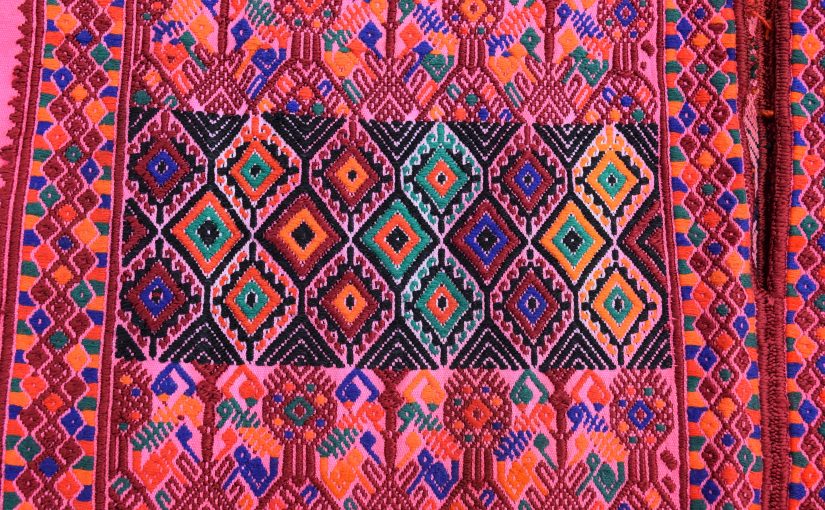
    9. Xintz’ib’an che le wuj.
    10. Xesolin le achijab’ chawech.
    11. Xkemen we wanab’ che jun po’t.
    12. Xtob’an alaq chqech.
    13. Xeriqon apan le ixoqib’ chawech.
    14. Xekamisan ri achijab’ che le utiw.
    15. Xk’ayin ri ixoq (you cannot add an oblique object here).
  • Tïjonïk 31 (Unit 31) Kab’antajik le sub’ (How to make tamales): Passive constructions II

    Tïjonïk 31 (Unit 31) Kab’antajik le sub’ (How to make tamales): Passive constructions II

    Passive II (or completive passive), in contrast with Passive I, focuses on the result of the event/action or on the resulting state. It conveys that an action has been completely finished. A common use is in descriptions of processes, such as describing a recipe (once x is done, then…). We will see an example in our tzijonik, in which Nan Xe’p explains how to make sub’ (tamales), typically used to accompany meals.

    Passive II focuses on the result of the event/action or on the resulting state. The passive II suffix is –(V)taj which is used with both root (CVC) and derived transitives (non-CVC). The vowel V of the  suffix –(V)taj is often dropped. It is usually the root vowel when present. Since these verb forms are intransitive, they take –ik when phrase final.

    Examples:

    kunaj: to heal; to cure

    Xkikunaj le ali ri ixoqib’. The women treated the girl.

    Xkunataj le ali (kumal ri ixoqib’). The girl was healed (by the women).

    Le ali xkunatajik. The girl was healed.

    B’an(o): to do

    Kub’ano. He/she is doing it; He/she does it; He/She will do it.

    Kab’anik. It is being done; It is done; It will be done.

    Kab’antajik. It is getting (completely) done; It is (completely) done; It will be (completely) done.

    In the completive passive (Pasive II) underlying agents are optionally introduced by utilizing E-umal:

    La xkunataj le ali awumal? La x-kunataj le ali aw-umal? Was the girl healed by you?


    Phrases that express an impersonal subject like “one can…X” or  “it can be X-ed…” are expressed in K’iche’ with the completive passive (passive II).

    Kak’oxomatajik. It can be understood.

    Keta’matajik. It can be learned.

    Kachomatajik It can be arranged.

    Kakunatajik One can be cured; One will get better.

    Na kab’antaj ta wumal I am not going to do it. Lit: It will not be done by me (this is what you can answer as a response to someone asking you to do something for that person)


    Irregular passive forms
    Active Passive I Passive II
    B’an(o) b’an(ik) b’antaj(ik)
    Tij(o) tij(ij) tijtaj(ik)
    Elesaj/Esaj elesax (only)
    Ta (to, phrase final) ta(ik)
     
    nab’e first…
    k’a te k’u ri then…/after…
    si’ firewood
    iyej (vit) to wait
    pis(o) vtr to wrap
    ch’aj (vtr) to wash
    nuk’ (vtr) to light (a fire)

    Using the following verbs, and following Nan Xe’p’s example, explain the process of making coffee:

    Le Kape
    Q’ol kape to pick coffee
    Sa’ to dry
    K’ilij to (dry) roast
    Jok’ to grind
    K’ayij to sell
    Loq’  to buy
    Nuk’ le q’aq’ to build a fire
    Ch’aj le k’olb’al to wash the coffeepot (container)
    K’aq puwi le q’aq’ to put (the pot) on the stove
    K’aq le saqli/joron  chupam to put water in (the container)
    K’aq le jok’om kape to put the ground coffee in
     Ch’u’q  to cover (with lid)
     Poq’owik  to boil
     Q’ij  to serve/pour coffee (and other hot liquids)
     
  • Tïjonïk 30 (Unit 30)  Xkunax le yawab’ (The sick one was healed): Passive constructions

    Tïjonïk 30 (Unit 30) Xkunax le yawab’ (The sick one was healed): Passive constructions

    In K’iche’ there are two passive constructions which highlight the object of the verb without expressing the agent or subject. We simply refer to them as Passive I and Passive II. In this unit we will deal with Passive I, and we will move on to Passive II on the following one.

    In passive voice the underlying object of a transitive verb is made into the subject of the passive verb phrase. Passive verbs are intransitive, which means that only one argument, the subject, is marked on the verb with Set B pronouns.  In the passive the agent of the underlying transitive phrase is not marked inside the verb anymore. It is demoted to an oblique and has to be introduced (when wanted) by the relational noun  -umal. In English, the agents of passive constructions are introduced by by. For example:

    Active:
    1. Xukunaj le yawab’ le aj q’ij he healed                the sick-one     the daykeeper V                                 O                     A The daykeeper healed the sick-one
    Passive:
    1. Xkunax le yawab’ (rumal le aj q’ij) was healed              the sick one     (by the daykeeper) V                                 S                      (oblique) The sick one was healed (by the daykeeper)
    Since the passive verb can only bind one argument to itself in a passive construction, we have to use Set B pronouns to mark the S of passive verbs in K’iche’. The passive verbs work like an intransitive verb, and as such, it adds the marker –ik when used at the end of a phrase.

    PASSIVE I The passive is marked on the verb as follows: 

    Non-CVC Transitive Verbs: -x + (ik) (the –x replaces the –j from active voice)
    1. Xukunaj (active) ‘she healed him’
      Xkunaxik (passive) ‘she was healed’
    CVC Transitive Verbslengthening of the root vowel + (ik)
    1. Xuchapo (active) ‘He grabbed it’ Xchapik (passive) ‘He was grabbed’
    If you want to express the agent for the passive voice verb, the relational noun –umal is used.
    1. Xkunax le yawab’ rumal le ajq’ij The sick one was cured by the day keeper
    However, you can do this in Passive I only if the agent is in the third person (by him/her/it/them). You have to use active voice if you want to express agents for the other persons: The man was cured by me.
    Xinkunaj le achi. (active) *xkunax le achi wumal (this is not permitted)

    Earlier we have seen that you cannot have a third person agent together with a second person formal object in active transitive verb constructions. The same concept however can be expressed by a passive construction:

    *Xukunaj la                 He healed you (formal)

    For these constructions a passive is used:
    1. Xkunax la rumal. You were healed by him.
    2. Kakunax la rumal. You will be healed by him.
    More examples of Passive I constructions:
    1. Xukunaj le ala ri ixoq. The woman cured the boy.
      Xkunax le ala (rumal ri ixoq). The boy was cured (by the woman).
      Le ala xkunaxik. The boy was cured.
    1. Xkichap le tz’i’ ri alab’om. The boys grabbed the dog.
      Xchap le tz’i’ (kumal ri alab’om). The dog was grabbed (by the boys).
      Le tz’i’ xchapik. The dog was grabbed.
    1. Xeril le taq wakax ri ali. The girl saw the cows.
      Xe’il le taq wakax (rumal ri ali). The cows were seen (by the girl).
      Le wakax xe’ilik. The cows were seen.
    1. Xatkito’ ri achijab’. The men helped you.
      Xatto’ (kumal ri achijab’) You were helped (by the men).
      Xatto’ik. You were helped.NOTE: Some dialects do not have long/short vowel distinctions. Also be aware that you may not hear the distinction in vowel length, and therefore you must pay close attention to the person-marking on root transitives.

      Which one of these phrases means “He found the dog” and which one means “The dog was found”?

      Xriq le tz’i’.

      Xuriq le tz’i’.

    anab’ sister
    b’a (affirmative particle)
    ch’aj (vtr) to wash
    chap (vtr) to grab
    che’ tree, jail
    eta’maj (vtr) to learn
    kam’ix shirt
    kunaj (vtr) to cure
    laq’apuj (vtr) to embrace
    majij (+verbal noun) to begin
    majij (vtr) to begin
    no’j though, way of thinking
    q’aluj (vtr) to carry in arms
    riq (vtr) to find
    sipaj (vtr) to give
    solij (vtr) to visit
    su’ (vtr) to wipe, to clean with a cloth
    tz’apij (vtr) to lock
    tzalij (vit) to return
    tzalij (vtr) to return something
    tzaqapij = tzoqopij (Nahualá) to let go of something
    we ne maybe
    we if, when
    xa ne if not…
    josq’ij to clean
     

    Change the following verbs/phrases to passive I constructions. Then, translate them into English:

    1. Xatinto’o.
    2. Xujril le utiw.
    3. Xqab’an qachak.
    4. Xinloq’ le po’t.
    5. Xkisipaj jun kami’x chwe.
    6. Xinriq le ame’s.
    7. Xutij le wa ri ala.
    8. Xinaq’aluj.
    9. Xajosq’ij le upa awo’ch.
    10. Xintz’ib’aj le wuj.
    11. Xatkisolij le achijab’.
    12. Xub’an jun po’t we wanab’.
    13. Xujto’ alaq.
    14. Xatkiriq le ixoqib’.
    15. Kakikamisaj le utiw ri achijab’.
    16. Xuk’ayij jun ak’ ri ixoq.
    Answers
    1. Xatto’ik; you were helped.
    2. Xojil rumal le utiw; we were seen by the coyote.
    3. Xb’an le qachak; our work was done.
    4. Xloq’ le po’t; the huipil (woven blouse) was bought.
    5. Xsipax jun kami’x kumal; the shirt was gifted by them.
    6. Xriq le am’es; your cat was found.
    7. Xtij le wa rumal le ala; the food was eaten by the young man.
    8. Xinq’aluxik; I was carried (on one’s legs).
    9. Xjosq’ix le upa awo’ch; your house was cleaned.
    10. Xtz’ib’ax le wuj; the book was written.
    11. Xatsolix kumal le achijab’: you were visited by the men.
    12. Xb’an jun po’t rumal we wanab’: the huipil was made by this sister of mine.
    13. Xujto’ik; we were helped.
    14. Xatriq kumal le ixoqib’: you were found by the women.
    15. Kakamisax le utiw kumal le achijab’: the coyote was killed by the men.
    16. Xk’ayix jun ak’ rumal ri ixoq: the hen was sold by the woman.
    Translate the following sentences into K’iche’, then make them passive:
    1. They heal us.
    2. We gave it to you.
    3. You all bought them (the cows)
    4. I visited you all.
    5. They love you.
    6. He sees me.
    7. They write it.
    8. We wash the clothes.
    Answers
    1. Xojkikunaj; xojkunax kumal.
    2. Xqaya’ chawe; xya’ chawe.
    3. Xi’loq’ taq le wakax; xeloq’ taq le wakax.
    4. Xixinsolij; xixsolixik.
    5. Katkaj; katajawax kumal.
    6. Kinril; kinil rumal.
    7. Kakitz’ib’aj; katz’ib’ax kumal.
    8. Kaqab’an le ch’ajo’n; kab’an le ch’ajo’n.

  • Tïjonïk 29 (Unit 29)  K’ak’ le nupo’t! (My huipil is new): Adjectives part 2

    Tïjonïk 29 (Unit 29) K’ak’ le nupo’t! (My huipil is new): Adjectives part 2

    This unit is a continuation of unit 28. We will deal with several more constructions that have to do with adjectives.

    Adjectives as nouns K’iche’ adjectives may act as nouns. When referencing humans, they take the regular plural suffix (-Vb’):

    Alaj       small, little alajib’              little ones

    Ri’j       old (person) ri’jab’              old people

    Ch’u’j   crazy ch’u’jab’          lunatics

    Meb’a’ poor meb’a’ib’         poor (pl)

    Q’inom rich q’inomab’        rich people

    q’or     lazy q’orib’             lazy ones

    Abstract nouns from adjectives When adjectival roots add the suffix  –Vl, they reference the quality expressed by the adjective or a relationship of inherent possession (the vowel of the suffix is not predictable and has to be learned).

    Pim                              thick

    E-pimal                        its thickness

    Upimal le lej                the thickness of the tortilla

    Ki’                               sweet

    E- ki’il                         its sweetness

    Uki’il le tara’s               the sweetness of the peach

    Intensification There are two ways of intensifying modifiers: the adverbial sib’alaj or the suffixal -alaj:

    Sib’alaj Sib’alaj is an adverb that can modify the predicate or verb of a phrase:

    Sib’alaj nich’ le nuch’ich’.                    My car is very small.

    Sib’alaj kaq le apalaj                            Your face is really red.

    -alaj The suffix –alaj intensifies adjectives and appears in attributive position only. There is no attributive –a linking attribute and noun.

    Jun nimalaj tz’i’                       a very big dog

    Jun itzelalaj winaq                   a very bad person

    Jun utzalaj winaq                     a very good person

    Adjectival quality gradations Adjectives in K’iche’ can be graded according to degree of its property. The suffix -C1-oj indicates a somewhat lesser degree of the quality expressed in the adjective.

    Saq       white/clean                  saqsoj              whitish/somewhat clean

    Rax       green/blue                    raxroj               greenish

    Kaq      red                               kaqkoj             reddish

    Q’an     yellow                         q’anq’oj           yellowish

    Q’eq     black                            q’eqq’oj           blackish

    Tz’il      dirty                             tz’iltz’oj           a little dirty

    Ki’        sweet                           ki’koj               a little/ bland

    B’aq     thin/bony                     b’aqb’oj           somewhat bony

    Ch’aqal(ik)       wet                  ch’aqch’oj         (still) damp

    Ch’am  sour                             ch’amch’oj      a little sour

    K’a       bitter                            k’ak’oj a little bitter

    Tza        salty                             tzatzoj              too salty

    Chom   big/fat                          chomchoj         a little chubby

    K’ax     hurting                         k’axk’oj           hurting somewhat

    K’axk’oj nujolom.        I have a little headache.

    Comparative phrases Comparative phrases require the pronoun are in phrase-initial position at the beginning and  the relational noun ch(i)–E-wach. Examples below use the third person sg. (ch-u-wach) because objects or people other than speaker and addressee are being compared.

    Are nim le atz’i’ chuwach le nutz’i’. Your dog the big in comparision with my dog Your dog is bigger than mine.

    Are sib’alaj kaq le apo’t chuwach le nupo’t Your huipil is red in comparision with my huipil Your huipil is redder/has more red in it than mine

    Sib’alaj aninaq kach’aw le are’ chinuwach in He speaks very fast in comparision with me He speaks a lot faster than I.

    For negation: “he is not Xer than….” the adjective or verb is negated with the usual na…ta(j) negation frame.

    Are na nim ta le atz’i’ chuwach le nutz’i’. Your dog is not bigger than mine.

    Are na aninaq ta kach’aw chinuwach in. He doesn’t talk faster than me.

    Superlatives To express the outstanding quality of an object, comparative phrases or the adverb sib’alaj with raised pitch and elongated pronunciation are used.

    Versive derivation An intransitive verb is derived from adjectives/nouns meaning to turn/become X or to acquire the quality of X . This derived verb is called a “versive” and is formed using the suffix –Vrik to the adjectival stem. The exact form of the vowel of the suffix has to be memorized. The suffix  –ik is a phrase final marker, which is dropped when the verb is not in phrase-final-position. Be aware that not every noun/adjective has a versive derivation. Versives derived from positional stems take the suffix –Vb’ik.

    Versive from adjectival roots (-a/ir(ik))

    Saq                   white               saqirik                         to turn white; to dawn; to fade (color)

    Kaq                  red                   kaqarik                        to turn red

    Q’eq                 black                q’eqarik                       to turn black

    Rax                   green               raxarik                         to turn green

    Q’an                 yellow             q’anarik                       to turn yellow

    Kow                 hard                 kowirik                        to turn hard

    K’ok’               tasty, fragrant  k’ok’arik                     to turn tasty, fragrant

    Q’aq’                hot                   q’aq’arik                      to get hot

    Chom               fat                    chomarik                     to get fat

    B’aq                 skinny             b’aqirik                        to get skinny

    Miq’in             hot                   miq’inarik                   to become hot/to warm up

    chaqi’j             dry                   chaqi’jarik                   to dry out

    Nitz’                 small                nitz’arik                       to become small


    Versives from positional roots (-ob’ik)

    Q’e’l                 old (things)      q’e’lob’ik                    to grow old (things)

    Tz’il                  dirty                 tz’ilob’ik                      to turn dirty

    “Joron” is an irregular versive:

    Joron                cold (not climate; but food and drink)    jorob’ik           to get cold (for example: coffee)

    Al heavy
    Alaj little (young, used for animals, children)
    B’aq thin (bony)
    Ch’am sour
    Tz’il dirty
    Ch’aqal(ik) wet (this is a positional adjective that loses suffixal -ik when not in phrase final position)
    Ch’u’j crazy
    Ch’uti’n/ch’utiq(pl) small
    Chaqi’j dry
    Chom fat
    Itzel evil
    Je’l beautiful
    Joron cold (food, drink, water)
    K’a bitter
    K’a’n mean
    K’ak’ new
    K’aslik alive, awake
    K’ax difficult, pain
    K’ok’ delicious
    Kamnaq dead
    Kaq red
    Ki’ sweet
    Ko strong, hard
    Miq’in hot
    Ne’ baby
    Nich’/nich’aq tiny, small
    Nitz’/Nitz’aq small, tiny
    Nim/Nimaq big
    Ojer ancient, back in the day
    Pim thick
    Q’an yellow
    Q’eq black
    Rax green, blue
    Rikil food (in the sense of dish or particular kind of food)
    Sak’aj industrious, ambitious, smart
    Sak’aj E-jolom to be smart, intelligent, early riser
    Saq white
    Tew cold (climate)
    Ti’oj muscular
    Tz’ikin bird
    Tza salty
    Utz good

    Translate the following sentences into English:

    1. Tz’iltz’oj le upowi’ le numam.
    2. Nim le ukami’x le ak’al.
    3. Kab’in le q’eq’akej pa le b’e.
    4. K’a’n le uch’utinan le walib’.
    5. Sib’alaj je’l le k’aslemal we kaloq’oj awib’.
    6. Ketyo’n le nimaq taq tz’i’.
    7. Xukoj le nuk’ak’a po’t le al Talin.
    8. Sib’alaj k’ok’ le uwa’l ik.
    9. Ch’am le q’or.
    Answers
    1. My grandfather’s hat is a little dirty.
    2. The boy’s shirt is big.
    3. The black horse walks on the street.
    4. My sister-in-law’s aunt is mean.
    5. Life is very beautiful if you love yourself.
    6. The big dogs bark.
    7. Talin wore my new huipil.
    8. The broth is very tasty.
    9. The atol went bad (it is sour).
    Translate the following sentences into K’iche’:
    1. The very good teacher died.
    2. The poor (ones) have no food.
    3. The book is thick.
    4. The little cats are in the milpa.
    5. Wel ate a delicious peach.
    6. Tomás has a black cat.
    7. María’s clothes are dry.
    8. Diego’s car is very small.
    Answers
    1. Xkam le utzalaj ajtij.
    2. Maj le kiwa le meb’a’ib’.
    3. Pim le wuj.
    4. Le nich’aq taq me’s e k’o pa le ab’ix.
    5. Xutij le k’ok’alaj tara’s le aWel.
    6. K’o jun uq’eqa me’s aMax.
    7. Chaqi’j le ratz’yaq le alMari’y.
    8. Nitz’ le uch’ich’ le aTe’k.

  • Tïjonïk 28 (Unit 28) K’ak’ le nupo’t! (My huipil is new): Adjectives part 1

    Tïjonïk 28 (Unit 28) K’ak’ le nupo’t! (My huipil is new): Adjectives part 1

    Adjectives modify nouns or add descriptive information about a noun or noun phrase. There are very few adjectives in K’iche’. They usually have the form CVC. Positionals, perfective verb forms, and nouns are used to modify nouns as well.

    *This is a two part unit. You will find the vocabulary and exercises in unit 29.

    1. Adjectives may be attached directly to the noun (attributive), like in:
    K’a’n fierce

    Le e k’a’na taq tz’i’ The fierce dogs

    Or they serve as the predicate of a stative phrase (predicative):

    K’ak’ new

    K’ak’ le nupo’t. My huipil is new.

    Sometimes, ideas typically expressed by adjectives in English, require intransitive verbs or stative phrases in K’iche’:

    Wa’ we q’ij,     nim   ub’antajik. This       day,    big     its-importance This is an important day.

    Num  (vi)         to be hungry

    Kinnumik.         I am hungry.

    Noj (vi)            to be full

    Xinnojik           I had enough to eat (I am full)

    Ki’kot (vi)        to be happy

    Kinki’kotik.       I am happy.

    B’ison (vi)       to be sad/pensive

    Kimb’isonik     I am sad.

    Kos (vi)            to be tired

    Kinkosik.          I am tired.

     
    1. Adjectives as attributes In K’iche’ adjectives used as attributives precede the noun they modify. An attributive vowel a is suffixed to the adjective before the head noun.
    nim ‘big’ + ja ‘house’=                          
    Le nima ja                  the big house saq ‘white’ + ja ‘house’=                      
    Le saqa ja                  the white house Itzel ‘evil’ + winaq ‘person’=                
    le itzelalaj winaq          evil person

    Le k’ak’a powi’                        the new hat

    Jun q’e’la powi’                       an old hat

    Nimatijob’al                             university (lit. the big school)

    Nima kej                                    big horse

     
    1. Nouns as attributes of other nouns When nouns are attributes of other nouns, they are linked with a.
    kem ‘weaving‘ + tz’ib’ ‘write’            =
    Kematz’ib’    computer kej ‘horse’ + ch’ich’ ‘metal thing’       =
    kejach’ich’   bicycle  
    1. Possessed compound nouns The “adjective-a noun” compound is a single word; therefore, possessive pronouns attach to the first element of the compound.
    Jun k’ak’a po’t                                    a new huipil

    Xinloq’ le nuk’ak’apo’t                    I bought the new huipil (for myself).

    A’re e uk’a’na taq tz’i’.                     They are his fierce dogs.

     
    1. Plural attributive adjectives In plural nouns with an attribute, the particle taq is added between attribute and noun. The attribute keeps the vowel –a.
    Le e q’eqa taq me’s                   the black cats

    E k’a’na taq tz’i’                      fierce dogs

    A’re e uk’a’na taq tz’i’            They are his fierce dogs.

    A few adjectives have irregular plural forms.  A glottal stop is inserted when part of the predicate.
    Singular Plural/Attributive Plural/Predicative
    nim (big)
    nimaq nima’q
    pim (thick)
    pimaq pima’q
    chom (fat, plump)
    chomaq choma’q
    nich’ (small)
    nich’aq nich’a’q
    nitz’ (small)
    nitz’aq nitz’a’q
    ch’uti’n (small, for things)
    ch’utiq  ch’uti’q
    The particle taq is required despite the plural marking on the adjective.  Such double plural marking is not uncommon in K’iche’.
    Le e nitz’aq taq tz’i’ the small dogs
    1. Adjectives as predicates As we have seen before, adjectives can be predicates:
    E nitz’a’q le taq imul. The rabbits are small.

    K’ak’ le nupo’t. My huipil is new.

    Reminder: Placement of the particle taq To pluralize nouns and modifiers, the particle taq is inserted between modifier and noun, even when the modifier is already in the plural:

    le saqa taq ja                the white houses

    le nimaq taq tz’i’          the big dogs

    When the adjective is in predicate position, the particle taq precedes the subject.

    E nima’q taq le tz’i’      The dogs are big (stative).

  • Tïjonïk 27 (Unit 27) Chatt’uyuloq! (Sit down!): Imperative with positional verbs

    Tïjonïk 27 (Unit 27) Chatt’uyuloq! (Sit down!): Imperative with positional verbs

    In this unit we will learn to construct imperative forms with positional roots.

    Imperative forms of intransitive positional verbs take Set B person agreement marking; the corresponding imperative suffixes are -a in phrase medial position and –oq in phrase-final position. The required TAM marker is ch- (or k-).

    The imperative base is the stative positional stem, formed by adding +Vrl to the root, unless the last consonant of the positional root is either r or in which case the suffix is +Vn.

    Imperative forms of transitive positional verbs take the suffix –Vb’a in which V is the root vowel.

    Examples

     –Vl

    1. Q’oy                 pos. root: lying down

    Q’oyi’(k)          to lie down

    Q’oyol              lying down

    Q’oyol le q’ab’arel. The drunk man is lying down.

    Chatq’oyoloq! Lie down!

    Chaq’oyob’a le ne’! Lie the baby down!

    2. T’uy                  pos. root: sitting

    T’uyi’(k)           to sit

    T’uyul               seated

    Oj t’uyul chi pa tem. We are already sitting on the bench.

    T’uyula alaq! You all, sit down! (formal)

    Chit’uyub’a le q’eb’al! (You all) set down the cooking pot!

    3. Tak’                  pos. root: standing tall

    Tak’i’(k)           to stand upright

    Tak’al               standing 

    Tak’al le ixoq chwach le q’atb’al tzij. The woman is standing in front of the city hall.

    Chixtak’ala chanim! (You all) stand up at once!

    Chatak’ab’a le qatat! Set father on his feet!

    +Vn 4. K’ul                  pos. root: marry

    K’uli’(k)           to marry

    K’ulan              married

    Oj k’ulan chik. We are already married.

    Chatk’ulana ruk’ le al Ska’! Marry Francisca!

    Xinkik’ulub’a le nutat nunan. My parents gave me away in marriage (married me off).

    More examples:

    Chatq’oyoloq!          Lie down!

    Chattak’aloq!            Stand up!

    Chattak’ala pa le tem! Stand up on the chair!

    T’uyula la! Sit! (you, formal sing)

    Chatt’uyuloq! Sit!

    Chatt’uyula pa le ch’at! Sit on the bed!

    Sepi'(k) sit kneeling
    Xuki'(k) kneeling on both knees
    Ch’uki'(k) sitting in a squatting position
    Xeki'(k) hanging/dangling from a nail
    Nak’i'(k) glued
    Tani'(k) to stop, to come to an end
    Ch’oki'(k) kneeling with one leg up

    Translate the following phrases into English:

    1. Chojk’ulanoq!
    2. Chinq’oyoloq!
    3. “Chojq’oyoloq,” xub’ij le qanan.
    4. Tak’ala la chuchi’ le ja!
    5. Chatt’uyula waral!
    Answers
    1. Let’s get married!
    2. Let me lie down!
    3. “Lie down,” said our mother
    4. Stand at the door of the house!
    5. Sit here!
    Translate the following phrases into K’iche’:
    1. Let them sit on the chair!
    2. Stand up! (you, formal)
    3. Let us lie in the bed!
    4. Sit!
    5. Let me stand up!
    Answers
    1. Chet’uyula pa tem!
    2. Tak’ala la!
    3. Chojq’oyola pa le ch’at!
    4. Chatt’uyuloq
    5. Chinwa’lijoq!

  • Tïjonïk 26 (Unidad 26) Kink’oji’ na! (I’ll stay yet): Locating Objects and People

    Tïjonïk 26 (Unidad 26) Kink’oji’ na! (I’ll stay yet): Locating Objects and People

    In K’iche’, the positional k’o and other words derived from it refer to location and existence. Its range of meanings include “to have,” “to exist,” and “to be.”

    Intransitive positional verb k’oji’(k):

    Incompletive aspect
    Kink’oji’(k)                    I am/I will be. Completive aspect
    xink’oji’(k)                    I was. Imperative aspect (stem: k’ol)
    Chink’oloq!                 Let me be!

    K’ola la                          Be! (2nd person, formal)


    Perfective aspect (stem: k’olinaq)
    In k’olinaq.                   I have been. Stative form (stem: k’o/ k’olik)
    In k’olik.                       I am.

    K’o la.                           You are (formal).

    La k’ax at k’olik?          Are you in pain?


    Negated stative (maj)

    In maj.                          I am not

    Maj.                              It is not/ No.

    Jawi katb’e wi? –        Maj kimb’e wi Where are you going? – I am not going anywhere.


    Possession: k’o + possessed noun

    K’o nuwuj.                               I have a book.

    La k’o awe?                             Do you have a boyfriend/girlfriend?


    Some examples:

    K’o ri achi pa ja. The man is at home.

    Xek’oji’ ri winaq pa nimaq’ij. The people were at the party (fiesta).

    Uj k’olinaq chila’ pa tinamit. We have been there in town.

    E maj qachalal aretaq xujopan pa ko’ch. Our relatives were not there when we arrived at their house.

    K’ola na la. Na kab’e ta la chanim. Stay a while. Don’t go yet (formal).

    Ajkun doctor, curandero, healer
    Kunab’al medicine
    Yawab’ sick
    K’ax pain, ailment
    “Utz b’a la” “Alright, then.” Common phrase to express agreement.
    Amaq’ country
    Nimaq’ij party, celebration, fair
    B’is sadness

    Translate the following sentences to K’iche’:

    1. Is your father home, children?
    2. There is no one home.
    3. Have you (alaq) been in the town behind that mountain there?
    4. Do you have your medicine?
    5. Were you at the party?
    Answers
    1. La k’o le itat, ak’alab’.
    2. Maj k’o pa ja.
    3. La k’olnaq alaq pa le tinamit je la’, chirij le juyub’
    4. La k’o akunab’al.
    5. La xatk’oji’ pa le nimaq’ij.
    Translate the following sentences to English:
    1. Naj xujk’oji’ pa tinamit aretaq xujb’e pa nimaq’ij.
    2. Jawi k’o wi le ro’ch le ajkun?
    3. Naj k’o wi le tinamit che le wo’ch.
    4. In k’olinaq pa le amaq’ Estados Unidos.
    5. La katk’oji’ na, nan?
    Answers
    1. We stayed a long time in the town when we went to the party.
    2. Where is the doctor’s house?
    3. The town is far from my house.
    4. I have been to the United States.
    5. Will you still be here, ma’am?

  • Tïjonïk 25 (Lesson 25) Kint’uyi’ (I sit on the chair): Positional Verbs

    Tïjonïk 25 (Lesson 25) Kint’uyi’ (I sit on the chair): Positional Verbs

    Positionals form a word class in K’iche’ defined by meaning and special word structure. They refer to “states” or “positions” of people or objects.

    Positionals form a word class in K’iche’ defined by meaning and word structure. They refer to “states” or “positions” of people or objects. Usually, they do not appear in root form but require additional suffixes and/or prefixes. Positional roots are of the form CVC (V is short). The following are some examples:

    1.

    T’uy                  “sit”

    Tak’                  “stand”

    Q’oy                 “lie down”

    K’ul                  “marry”

    K’as                 “live”

    Positionals as intransitive verbs

    Positional roots become intransitive verbs when the suffix –i’(k) is added (instead of –ik for regular intransitive verbs). In non phrase final position, the suffix looses the –k, but the glottal stop remains. The intransitive positional verb can be paraphrased as: to bring oneself into X position or state.

    2.

    T’uy                                       “sit”

    Kint’uyi’k                    I sit down

    Kint’uyi’ pa tem I sit down on the chair.

    3.

    kot                               “curved, bent”

    Kamul kakoti’ le kumatz chqawach. The snake curls twice in front of us.

    4.

    k’as                             “live, awake”

    Le wija’ xintiko, xk’asi’k. My seed that I planted is alive

    Positionals as adjectives/stative verbs

    Positional roots become statives the suffix –Vris added, ( V is the root vowel). This stative stem is used is various ways, as outlined below. It can be paraphrased as “to be in X position/state”. These forms take the suffix –ik when in phrase-final position.

    5.

    T’uylik                  “sit”

    T’uyul               seated

    6.

    Tak’alik                  “stand”

    Tak’al                  standing

    7.

    Chem            “still or dammed water”

    Chemel      standing water

    Please note that the stative verb also (as well as the positional verb) takes phrase-final –ik

    8.

    T’uy                                          “sit”

    In t’uyulik.                  I am seated

    In t’uyul puwi le ch’at.             I am seated on the bed.

    Kint’uyi’k.          I am sitting down.

    When the positional root ends in –V’, only –l forms the adjective/stative stem

    9.

    Q’a’                   “lean against something”

    Kinq’a’i’k.                   I am leaning.

    Q’a’l                                         Leaning

    In q’a’l chirij le tem. I am leaning back in the chair.

    10.

    Q’e’ Turned lengthwise in an obstructive manner

    Kaq’e’i’k It is across turned lengthwise.

    Q’e’l                    to be turned lengthwise

    Q’e’l le che’ pa le b’e.               The tree is lying lengthwise across the road.

    Q’e’l le ch’ich’ pa le b’e.           The car is turned lengthwise (and is obstructing) the way on the road.

    11.

    Cho’ “empty” a container that is not full yet, used mainly for beans and nixtamal (hominy)

    Cho’l                                        empty

    Cho’l upam le t’u’y                  the pot has still some space in it

    12.

    Ku’                                           “sit”

    Ku’l                                       sitting/seated

    Xku’i’ le nima q’atb’al tzij The president is in office (has been seated).

    If the second consonant of the positional CVC root is –l or –r, the adjective/stative suffix becomes –Vn, in which case V does not necessarily repeat the root vowel.

    13.

    K’ul                                          to marry

    K’ulan                                      married

    Janipa chi ix k’ulanik? How long have you been married?

    14.

    Chol                                “to be in a line”

    Cholon                                 “lined up”

    E cholon chi le ak’alab’ chwach le tijob’al. The children are lined up in front of the school.

    15.

    Ter                                            “follow”

    Teren                                       following

    Le tz’i’ teren chirij le rajaw.       The dog is following behind its owner.

    16.

    Kor                  “loose, not being tied up”

    Koron                                       loose

    Xkori’ le nupam.                       “My stomach hangs loose” i.e. my belt is not tight enough.

    Plural forms

    Plural forms require adding the plural pronouns uj, ix, alaq or e.

    E t’uyul le i’xoqib’.                              The women are sitting.

    E t’uyulik.                                            They are sitting.

    There is another plural positional form with an additional distributive semantics. It is formed by –Vr C1oj/uj. When the root vowel is –u-, the suffix is –uj, otherwise it is –oj. In the distributive the verb/event acts on each individual component, similar to English: each one of you, instead of just you.

    17.

    T’uyul                          
    E T’uyut’uj.                    They are seated. Tak’al                          
    Oj tak’atoj.                    We are standing. Mulan                         
    E mulumuj.                   They are gathered together. K’ulan                         
    Oj k’uluk’uj.                 We are married (everyone of us).

    Oj k’ulan.                      We are sitting.

    Q’a’l                            
    E q’a’q’oj.                     They are leaning.

    Commands and requests for positional verbs

    The  imperative of intransitive positional verbs derives from the stative stem. The latter is treated like a regular intransitive imperative stem, taking  aspect, and dependent/imperative suffixes. Lesson 27 will deal with these forms specifically.

    18.

    Q’oy                                         “Lie down”

    Q’oyol                                   lying down

    Ch-in-q’oyol-oq! I shall lie down; let me lie down!

    Q’oyola la! Lie down (formal, sing)!

    Q’oyola alaq/Q’oyol a’laq!       You all (formal) lie down!

    Perfective aspect of positional intransitive verbs (we will also look at the perfect in coming lessons) 

    The perfective aspect refers to actions begun in the past but whose effects or induced states carry into the present, like the English perfect “I have stood” or “I have sat.” The perfective aspect of the positionals is based on the stative positional stem and the suffix –inaq.

    19.

    T’uy                              “sit”

    T’uyul                           seated

    In t’uyulinaq              I have sat

    T’uy (positional root) to sit
    Q’oy (positional root) to lie down
    K’ul (positional root) to marry
    K’ulanem wedding/ marriage
    Sepi’ (positional root) to kneel (to sit on one’s legs, folded underneath)
    Xuki’ (positional root) to kneel (legs at a 90 degree angle)
    Wa’lij(ik) to rise, to get up
    Q’ax(ik) to pass, to go by
    Tz’umaj to kiss
    Pixab’ speech, advise, words told to the couple in preparation for married life

    Translate the following phrases to English:

    1. Chatak’ab’a le ne’.
    2. Xukul le ixoq pa le tyox.
    3. Chint’uyuloq.
    4. In sepelik (sepel: sentarse sobre los pies)
    Answers
    1. Make the baby stand up.
    2. The woman is kneeling in the church.
    3. Let me sit.
    4. I am sitting on my feet.
    Translate the following phrases to K’iche’:
    1. I fell asleep on grandfather’s bed.
    2. They are in the middle of the path.
    3. You stand up on the chair.
    4. Let’s sit down.
    Answers
    1. Xinwar pa le uch’at le numam.
    2. Xeq’e’i’ pa le b’e.
    3. Kattak’i’ pa le tem.
    4. Kojt’uyuloq.

  • Tïjonïk 24 (Unidad 24)  Chachajij awib’! (Take care of yourself!): Reflexive constructions

    Tïjonïk 24 (Unidad 24) Chachajij awib’! (Take care of yourself!): Reflexive constructions

    In this lesson we will learn reflexive and reciprocal constructions, as well as some nominal phrases that utilize them.

    In reflexives constructions, the subject and object of transitive verbs are the same. In K’iche’ they are formed with the relational noun –ib’ “self” following the verb. With some exceptions, -ib’ agrees in person and number with the verbal subject, as in English.

    Reflexives constructions require a transitive verb, which may be a completive passive.  In honorific address, the pronouns la/alaq are used once, after the reflexive noun (see the example below).

     
    w-ib’
    myself
    q-ib’
    ourselves
    aw-ib’
    yourself (informal)
    iw-ib’
    y’all’s selves (informal)
    ib’ la
    yourself (formal)
    ib’ alaq
    y’all’s selves (formal)
    r-ib’
    her/his/its self
    k-ib’
    themselves
    An example of an incompletive reflexive verb:

    Kintijoj wib’ I study.

    Katijoj awib’ You study.

    Kutijoj rib’ He/she studies.

    Katijoj ib’ la. You (formal, sg) study.

    Kaqatijoj qib’. We study

    Kitijoj iwib’. You all study.

    Kakitijoj kib’. They study.

    Katijoj ib’ alaq. You all (formal) study.

    In the plural, reflexive constructions can have a reciprocal meaning “with each other

    Kaqariq qib’ chwe’q. We will meet each other tomorrow.

    A colloquial way to say good-bye:

    Qaqil chi (na) qib’! We will see each other! See you later!

    The reflexive marker –ib’  occurs also in nouns. It does not take possessive markers if it is not possessed.

    Ilb’al ib’ Mirror.

    Xinloq’ jun wilb’al wib’. I bought a mirror for myself.

    K’exb’em ib’ The difference.

    Jas le uk’exb’em rib’ le jun ruk’ le jun chik? What is the difference between this one and the other one?

    Riqoj ib’ The meeting.

    K’o jun riqoj ib’. There is a meeting.

    K’o jun qariqoj qib’ chwe’q. We have a meeting tomorrow.

    Owan ib’ Hide-and-seek (name of the game).

    Ke’tz’an le ak’alab’ chech owan ib’ The children play hide-and-seek.

    Xib’in ib’ A scare.

    Le nimaq’ij rech Halloween jun nimalaj xib’in ib’. Halloween is a big scare.

    Tzuqb’al qib’ Something that you use to make a living; that which feeds us, puts food on the table.

    Are le nuchak jun tzuqb’al wib’. My work is what puts food on the table.

    chajij to guard; to take care of
    chajij -ib’ to be careful; to take care of one’s self
    ch’ab’ej to talk with somebody
    ch’ab’ej -ib’ to talk with each other
    xe’j ib’//xib’ij to be frightened, scared; to frighten
    kamsaj to kill
    riq(o) to find
    riq -ib’ to meet up
    esaj/elesaj to take out; to remove
    esaj ib’ to remove one’s self (from); to quit something
    tijoj to teach
    tijoj -ib’ (che) to study; to teach one’s self
    ch’aj to wash/to bathe/shower
    ch’ajoj -ib’ to wash one’s self
    b’an ub’anik -ib’ to prepare
    tas -ib’ to become independent, to isolate oneself

    Translate the following phrases into English:

    1. Kaqatijoj qib’ che le chak.
    2. Kachajij ib’ alaq.
    3. Xinxe’j wib’.
    4. La xich’ab’ej iwib’ iwir?
    5. Kariq ib’ alaq pa k’ayb’al.
    6. Kaqachajij qib’ pa b’e.
    7. Karesaj rib’ pa le chak.
    8. Kich’ab’ej iwib’ ruk’ le nunan.
    Answers
    1. .We get trained for the job.
    2. Take care of yourselves (formal, plural).
    3. I got scared.
    4. Did you all talk to each other yesterday?
    5. You all meet each other at the market.
    6. We take care of each other on the way.
    7. He/she resigned from his/her job.
    8. You all talk to my mother.
    Translate the following phrases into K’iche’
    1. I am going to become independent from my parents.
    2. They were killing each other when I arrived.
    3. Did you meet each other this morning?
    4. We are studying for the class.
    5. Did you (formal, pl) frighten yourselves?
    6. We are taking care of each other.
    7. Tomorrow we are talking again.
    8. Did you wash yourself?
    9. Did you prepare yourself for the meeting?
    10. I am seeing myself.
    Answers
    1. Kintas wib’ chkij le nutat nunan.
    2. Tajin kakikamsaj kib’ aretaq xinopanik.
    3. La xiriq iwib’ nimaq’ab’.
    4. Kaqatijoj qib’ che le tijonik.
    5. La xe’j ib’ alaq?
    6. Kaqachajij qib’.
    7. Kaqach’ab’ej qib’ chwe’q.
    8. La xach’aj awib’?
    9. La xab’an ub’anik awib’ che le chomal?
    10. Kinwil wib’.

  • Tïjonïk 23 (Unit 23) Jun Tz’i’, Keb’ Tz’i’, Oxib’ Tz’i’ (One tz’i’, two tz’i’, Three tz’i’): Numbers

    Tïjonïk 23 (Unit 23) Jun Tz’i’, Keb’ Tz’i’, Oxib’ Tz’i’ (One tz’i’, two tz’i’, Three tz’i’): Numbers

    K’iche’ numbers beyond three have been mostly replaced by Spanish numbers. Most people count to three in K’iche’ but for higher numbers they count in Spanish. Numbers up through 20 are generally understood but rarely used. The K’iche’ numerical system is vigesimal, base-20.

     
    Jun
    1
    Keb’
    2
    Oxib’
    3
    Kajib’
    4
    Jo’ob’
    5
    Waqib’
    6
    Wuqub’
    7
    Wajxaqib’
    8
    B’elejeb’
    9
    Lajuj
    10
    Julajuj
    11
    Kab’lajuj
    12
    Oxlajuj
    13
    Kajlajuj
    14
    O’lajuj
    15
    Waqlajuj
    16
    Wuqlajuj
    17
    Wajxaqlajuj
    18
    B’elejlajuj
    19
    Juk’al
    20
    Juwinaq
    20
    Winaq is generally used for counting up to 40, then it switches to k’al.
    Juk’al jun
    21
    Juwinaq jun
    21
    Juwinaq kajlajuj
    34
    Oxk’al jo’ob
    65
    Jumuch’
    80
    Kajk’al
    80
    O’k’al
    100
    Juq’o’
    400
    Kaq’o’ lajk’al
    1000
    Oq’o’
    2000
    Ordinal numbers
    Nab’e
    first
    Ukab’
    second
    Urox
    third
    Ukaj
    fourth
    Uro’
    fifth
    Uwaqaq
    sixth
    Uwuq
    seventh
    Uwajxaq
    eighth
    Ub’elej
    ninth
    Ulaj/ulajuj
    tenth
    Ujulaj
    eleventh
    Ujuwinaq
    twentieth
    Nab’e mul
    (for the) first time
    Are le ukab’ wal.
    She is my second child.
    Are le urox nuwuj.
    This is my third book.
    Distributive Numbers
    Jujun
    one by one
    Kakab’
     two by two
     
    Ox’ox
     three by three
     
    Kajkaj
    four by four
     
    Jo’taq
     five by five
     
    Waqtaq
    six by six
     
    Wuqtaq
    seven by seven
     
    Wajxaqtaq
    eight by eight
     
    B’elejtaq
    nine by nine
     
    Lajtaq
    ten by ten
     
    Jujun qech
    one for each one of us
    Kaya jujun qech le wuj.
    You give each of us a piece of paper.
    Jun chqe.
    One of us.
    Jujun chqech.
    Some of us.
    E keb’ chqech.
    Two of us.
    Chi jujunal
    (as) one by one
    Le tïjonik pa jujunal
    The individual lesson / One-on-one lesson
    Kakab’ chi qajujunal
    two for each of us
    chi kakab’il
    as two by two
    Marking Time
    Kamik
    today
    Chanim
    right now
    Miyer
    a little time ago/recently
    Chwe’q
    tomorrow
    -(ij)ir Time past
    Iwir
    yesterday
    Kab’ijir
    the day before yesterday
    Oxjir
    three days ago
    Junab’ir
    a year ago
    Wuqub’xir
    a week ago
    -ij Time to come
    Kab’ij
    day after tomorrow
    Oxij
    in three days
    Kajij
    in four days
    Wuqub’ix
    in a week
    Pa jun junab’ aq’anoq
    a year from now
    Pa keb’ ik’ aq’anoq
    two months from now
    Pa le jun chi junab’
    next year
    Pa jun uwuqq’ij kanoq
    a week ago
    Pa oxib’ uwuqq’ij aq’anoq
    in three weeks
    Junab’ir
    a year ago
    Kab’ir
    two years ago
    Oxb’ir
    three years ago
    Pa kakab’ q’ij
    every two days
    Pa ox’ox ik’
    every three months
    Pa kajkaj junab’
    every four years
    Pa oxib’ ik’
    in three months
    Telling time
    Ramaj
    hour/moment
    Ch’utiq ramaj
    minute(s)
    Nik’aj
    half
    Jachike ramaj chanim?
    What time is it now?
    Oxib’ ruk’ nik’aj.
    Half past three.
    Jachike ramaj kumajij le qatijonik?
    When does our class start?
    Pa julajuj ruk’ lajuj ch’utiq ramaj.
    ten after eleven.
    Karaj na lajuj ch’utiq ramaj pa le wuqub’ ramaj.
    ten ’til seven / 6:50
    Karaj diez minutos pa las diez.
    ten ’til ten / 9:50
    Xq’ax lajuj ch’utiq ramaj chech le lajuj ramaj.
    ten past ten / 10:10
    Xq’ax diez minutos chech a las diez.
    ten past ten / 10:10
    Kumajij pa b’elejeb’ ramaj, katani’ pa kab’lajuj ramaj.
    It goes from nine to twelve. (lit: it begins at nine and ends at 12)
    Times of the day
    Saqirik
    Good morning!; sunrise
    Xsaqir chanim
    It has dawned
    Nimaq’ab
    Morning
    Xpaqi’ le q’ij
    Mid-monring (10 am)
    Tik’il le q’ij
    Noon
    Pa q’ij
    Noon
    Xb’e le q’ij
    Afternoon
    B’enaq’ij
    Afternoon
     
    Xulan q’ij
    Afternoon; sundown
    Xulan q’ij kimb’e pa nutaqkil.
    In the afternoon I run my errands.
    Xok aq’ab’
    Good evening! (It is night already)
    Nik’aj aq’ab’
    Midnight
    Aq’ab’il
    Early morning right before or at sunrise
    Aq’ab’il ximb’e pa si’.
    Early in the morning I went to gather firewood.
    Indefinite numbers and related words
    Jun
    a/one
    Jujun
    some
    Keb’ oxib’
    a few
    -onojel
    all; each
    Ronojel le…
    all (of) the…
    Le (e) nik’aj chik
    the rest; the others
    K’o jujun k’o kichak, le e nik’aj chik ku’xlanik.
    There are some who have work, but the others are on vacation.
    K’o e jujun Kechakunik, k’o e jujuj na kechakun taj.
    There are some who work and others who do not work.
    Shopping/Money
    Pwaq
    money
    Ch’ich’apwaq
    (metal) coins
    Wuj
    bills (money)
    Real
    coins (antiquated)
    Pajb’al
    measure (pound if referring to weight)
    Nik’aj
    half
    Ajlanik pa le k’ayb’al
    counting in the market
    Kaya jun pajb’al nusaqwach.
    Give me a pound of potatoes.
    Kaya keb’ pajb’al we le pix.
    Give me two pounds of these tomatoes.